

[SLOSS home]
Planning for the future
The South London Office of Specialised Services (SLOSS) is working with our South London partners to ensure specialised services remain sustainable, effective, and ready to meet future health needs.
Our sustainability review is looking across the entire portfolio of specialised services, from complex cardiac care and paediatrics, to rare blood disorders, neurosciences, and more. The focus? Making the best use of people, places and pounds: that is, ensuring we’ve got the right clinical teams in the right places, delivering care that is high quality, equitable and financially sustainable.
Why this matters
Specialised services are vital. They support people with the most complex or rare conditions and are delivered by expert teams at major hospitals across our region. But there are real pressures: growing demand, rising costs, workforce challenges, and the need for more integrated care across pathways.
Our sustainability review is about understanding the full picture, analysing data and insights across the system, and working together to plan ahead.
What we’ve done so far
We’ve already taken a robust and thorough look at how specialised services are working across South London, including:
- Analysing demand, costs and activity patterns across all specialised services
- Reviewing referral flows, thresholds and service models across the system
- Identifying over 25 areas for further investigation where service improvements may be needed
- Engaging with NHS trusts, integrated care boards, and clinical networks as well as NHS England
- Working alongside transformation commissioning teams to shape local priorities
- Linking in with relevant efficiency and sustainability initiatives across both ICSs
This work has helped pinpoint where services are most under pressure and where collaboration could unlock improvements.
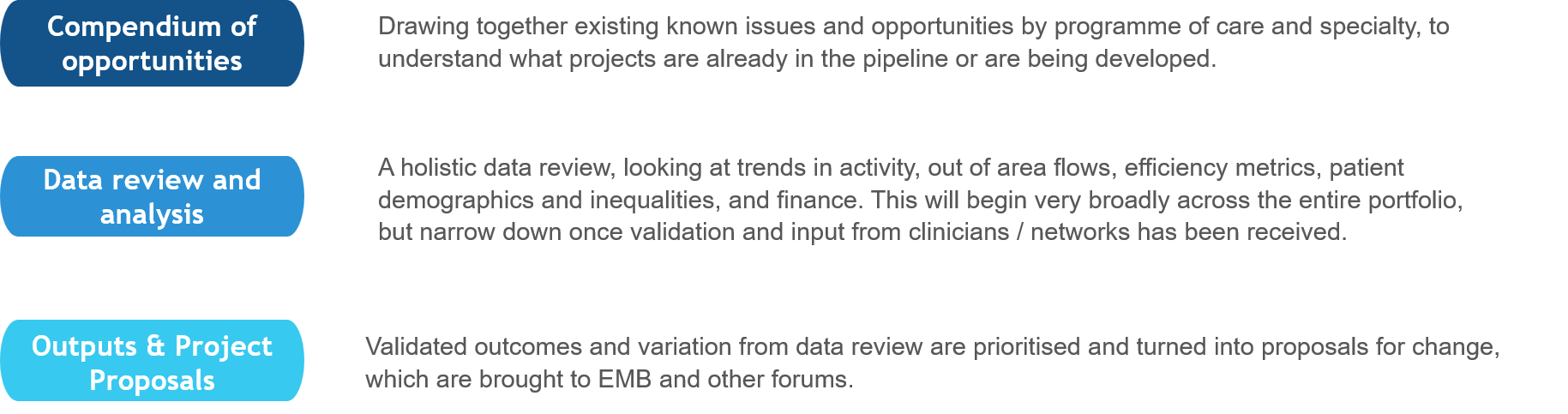
What we’re doing now
We’re focussing on four key categories that could help improve sustainability while maintaining, and where possible, improving, quality and experience for patients:
- Where and how care is delivered – For example, exploring ways to free up capacity at the most specialist centres by delivering some care in more local settings.
- Referral flows – Understanding how patients move across services and looking for improvements that could support quicker or more consistent access.
- Clinical thresholds – Considering how we define who gets what type of care, and ensuring those most in need are prioritised.
- Procurement and costs – Identifying opportunities and pooling our purchasing power across the system.
This work is based in robust data, including a system wide review of patient flows, costs, and service outcomes. We’re engaging with providers, commissioners, specialised clinical networks and others to understand where meaningful change is possible – and where it isn’t (ie, what is out of scope).
A careful and evidence based approach
The South London sustainability review isn’t about proposing sudden changes, cuts to services, or moving care further from where people live.
Instead, the review takes a careful, evidence based approach, looking at where services are under pressure, where there are ways to work more efficiently, and how we can plan better for the long term.
What happens next
The next phase of the review (through winter 2025) sets the groundwork for future transformation across South London. Over the coming months, we’ll continue:
- Working with clinical networks on specialties like cardiology and paediatrics
- Supporting NHS trusts to identify priority areas for improvement or investment
- Aligning with broader ICB sustainability programmes in South East London and South West London
The South London sustainability review will help inform system wide planning and decision making for the future, shaping how specialised care is commissioned, delivered, and sustained across South London.
Enquiries
Please direct questions to Andrea Marlow.